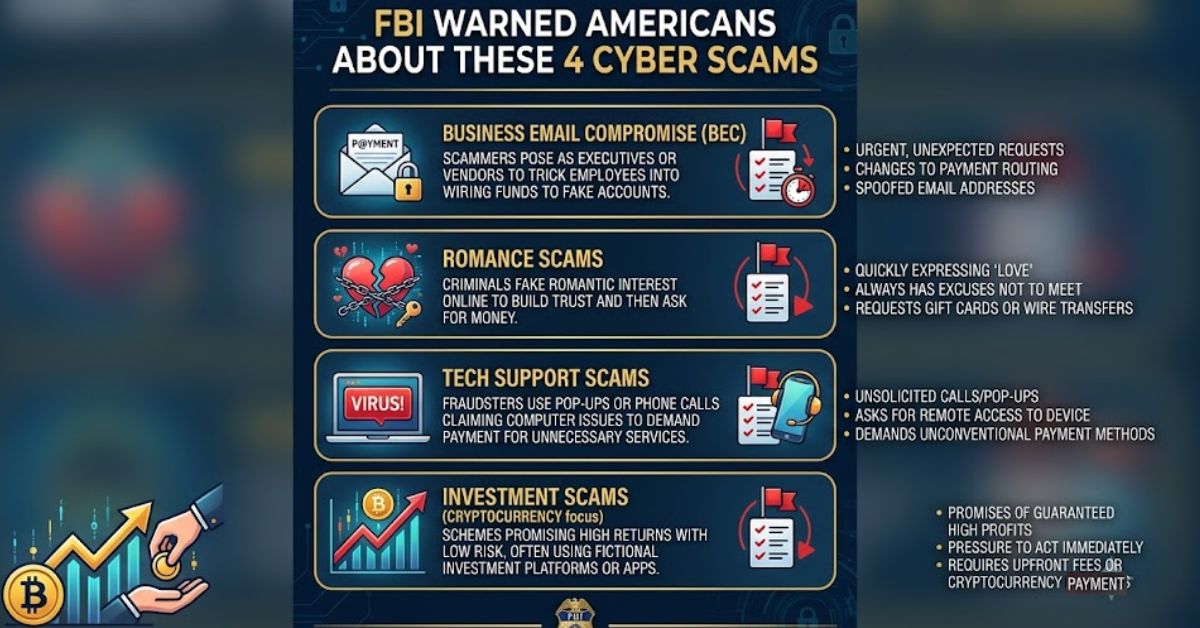
The FBI Warned Americans about several sophisticated fraud and cybersecurity threats during 2026. These schemes do not always look like obvious spam. Criminals are using AI-generated videos, authentic-looking government phone numbers, copied websites, fake ticket offers, and compromised network devices. Their objective is usually to steal money, login credentials, banking information, Social Security numbers, or access to personal devices.
The common thread is impersonation. Scammers borrow the authority of the FBI, IC3, banks, major sporting organizations, and government officials to make victims act quickly. Some even target people who have already lost money in an earlier scam. Understanding how each scheme works can help you pause, verify the contact independently, and avoid becoming a repeat victim.
What the Latest FBI Warnings Mean
The FBI Warned has appeared across several alerts, but the warnings address separate threats. On July 20, 2026, IC3 described scammers using AI-generated FBI videos and spoofed complaint websites. FBI Albany issued a phone-spoofing warning on July 17. A joint router-security advisory appeared on July 13, while the FIFA website warning was published on May 27.
These campaigns differ technically, but they rely on the same psychological pressure. The criminal creates an urgent problem, presents a trusted authority as the solution, and asks the victim to follow instructions before checking the facts. Requests may involve transferring money, entering personal information, downloading software, moving to an encrypted messaging app, or visiting a website that closely resembles an official page.
| Warning | Main tactic | Likely target | Primary risk |
|---|---|---|---|
| Fake IC3 recovery service | AI deepfake and spoofed website | Previous scam victims | Identity and financial theft |
| Router exploitation | Vulnerable or outdated devices | Organizations and internet users | Hidden malicious traffic |
| FBI Albany spoofing | Fake agent and caller ID spoofing | Phone users | Money and personal data theft |
| Fake FIFA websites | Typosquatting and fake offers | Soccer fans and job seekers | Credentials, payments and identity theft |
Deepfake Scams Impersonating FBI and IC3 Officials
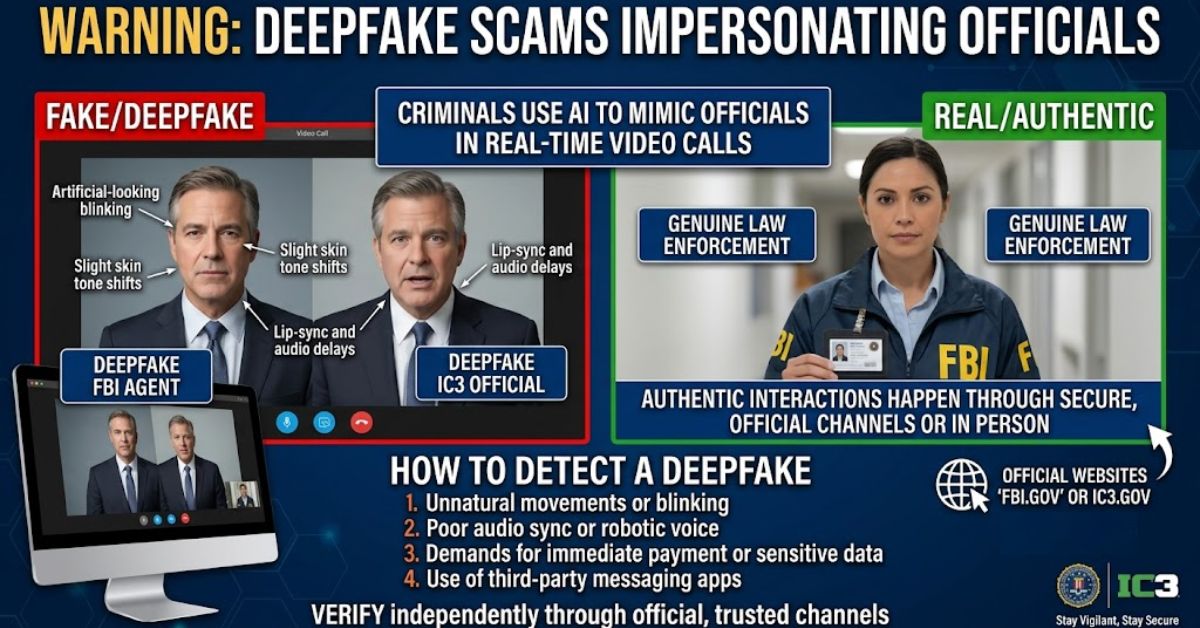
The FBI Warned that scammers are creating AI-generated videos depicting senior FBI personnel. These videos direct viewers toward fake IC3 pages or supposed fund-recovery services. Some victims are contacted after filing or discussing an earlier cybercrime complaint. The criminal claims that stolen funds have been located, but the recovery offer is designed to collect more personal information or money from the victim.
IC3 does not operate social media profiles and does not recover money through Facebook, Telegram, public forums, or private messaging applications. It also does not directly contact complainants by phone, email, social media, or chat. When additional information is required, a local FBI field office or another law enforcement agency may contact the person. IC3 will never demand a recovery payment.
Warning signs of a fake IC3 interaction include:
- A promise to recover cryptocurrency or stolen funds
- A request for an upfront processing fee
- Contact through Telegram, Facebook Messenger or social media
- A website that does not end in
.gov - A form requesting banking or cryptocurrency information
- A video with unnatural facial movements, shadows or voice timing
- Pressure to respond before verifying the sender
Router Threats and State-Sponsored Cyber Activity
The July 13, 2026, joint advisory focused specifically on Russian state-sponsored actors exploiting poorly configured routers and networks connected to critical infrastructure. It urged organizations to use strong passwords, update firmware, disable insecure services, and apply stronger network-management controls. It did not describe one combined campaign involving Russia, China, Iran, and North Korea targeting every home router.
The broader threat remains serious. The FBI identifies China, Russia, Iran, and North Korea as major sources of state-sponsored cyber intrusions against U.S. victims. Separate warnings have documented criminals and foreign actors abusing routers to conceal activity or create residential proxy networks. Older routers are especially vulnerable when manufacturers no longer provide firmware updates or security patches.
Use this router-security checklist:
- Install the newest available firmware.
- Replace routers that no longer receive updates.
- Change the default administrator username and password.
- Disable remote administration unless it is essential.
- Enable automatic security updates where available.
- Review connected devices and unfamiliar settings.
- Reboot after updating settings or when suspicious activity appears.
- Contact the manufacturer or internet provider if compromise is suspected.
A reboot can interrupt certain malicious processes, but it is not a complete fix for every router infection. Some compromises require a factory reset, updated firmware, new credentials, or replacement hardware. Connectivity problems, unexplained setting changes and overheating can be warning signs, although they do not prove that a router has been hacked.
FBI Albany Phone Number Spoofing Scam
The FBI Warned residents about calls displaying the real main number of its Albany Field Office. The scam begins with someone pretending to represent a bank. The caller claims the victim’s information was used to open an account and purchase a firearm. The call is then supposedly transferred to an FBI agent investigating the fraudulent transaction.
The fake agent may provide a name and badge number or ask the victim to continue the conversation through an encrypted messaging application. Caller ID does not prove that a call is genuine because criminals can manipulate the displayed number. The FBI says it will never call or email private citizens to demand payment, threaten arrest, or request sensitive personal information.
| Suspicious behavior | Legitimate response |
| Caller demands immediate payment | Hang up without paying |
| Caller asks for gift cards or cryptocurrency | Refuse and end the call |
| Caller threatens arrest | Contact the agency independently |
| Caller requests a Social Security number | Do not provide it |
| Caller asks to move to an encrypted app | Stop communicating |
| Caller provides a badge number | Verify through an official field office |
Never verify the caller by using a number, link or email address they provide. Find the agency’s official contact information independently and make a separate call.
Fake FIFA World Cup Websites and Ticket Scams
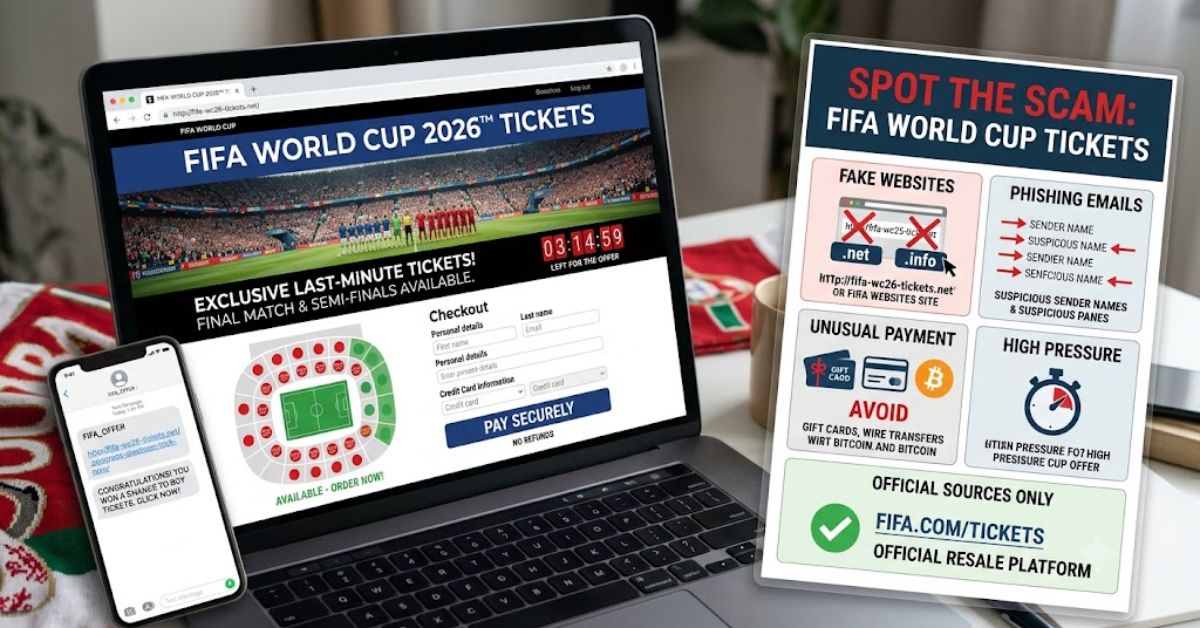
The FBI Warned soccer fans that threat actors were creating websites designed to imitate FIFA before and during the 2026 World Cup. These pages may advertise fake tickets, hospitality packages, merchandise, jobs or account services. They can also collect names, addresses, phone numbers, email addresses, payment details and login credentials.
Many of these sites use typosquatting. A criminal may change one letter, add an extra word, or use a different domain ending. The FBI identified numerous examples and warned that additional domains would continue appearing. Users should type the official FIFA address directly, verify that the domain ends correctly, and avoid sponsored search results that may imitate the legitimate website.
Before purchasing tickets or entering account information:
- Type the official website address directly into the browser.
- Check every letter in the domain name.
- Avoid ticket offers received through unsolicited messages.
- Do not trust a site only because it uses official logos.
- Verify hospitality and employment offers through official channels.
- Use a credit card with fraud protection rather than cryptocurrency.
- Save transaction records, messages and screenshots.
What to Do When You Receive a Suspicious Message
When an unexpected call, video or message creates fear or excitement, stop before responding. Do not click links, download files, install remote-access software, send money, or provide personal information. Take a screenshot or record the caller’s details when it is safe to do so. Then verify the organization through an official website or a phone number you found independently.
If information or money has already been shared, act immediately. Contact the relevant bank or payment provider, change exposed passwords, enable multifactor authentication, and review accounts for unauthorized activity. Report internet-enabled fraud through the legitimate IC3 website. Include the scammer’s contact details, website domain, communication method, payment records, cryptocurrency addresses and a description of what happened.
Immediate response checklist:
- Stop communicating with the suspected scammer.
- Do not delete messages or payment records.
- Contact your bank or card issuer.
- Change compromised passwords.
- Enable multifactor authentication.
- Scan devices for malware.
- Report impersonation accounts to the platform.
- Submit a detailed IC3 complaint.
- Warn affected family members or coworkers.
Conclusion
The FBI Warned Americans because modern scams increasingly combine convincing technology with familiar pressure tactics. Deepfake FBI videos, spoofed field-office calls, fake FIFA websites and compromised routers may appear unrelated, but each threat depends on people trusting what they see on a screen or caller ID without independent verification.
The strongest defense is to slow down. Confirm websites, phone numbers and identities through separate official channels. Never pay someone claiming to recover stolen funds, and never assume a government-looking number or AI-generated video is authentic. Updated devices, strong passwords and careful verification can stop most of these schemes before financial or personal damage occurs.