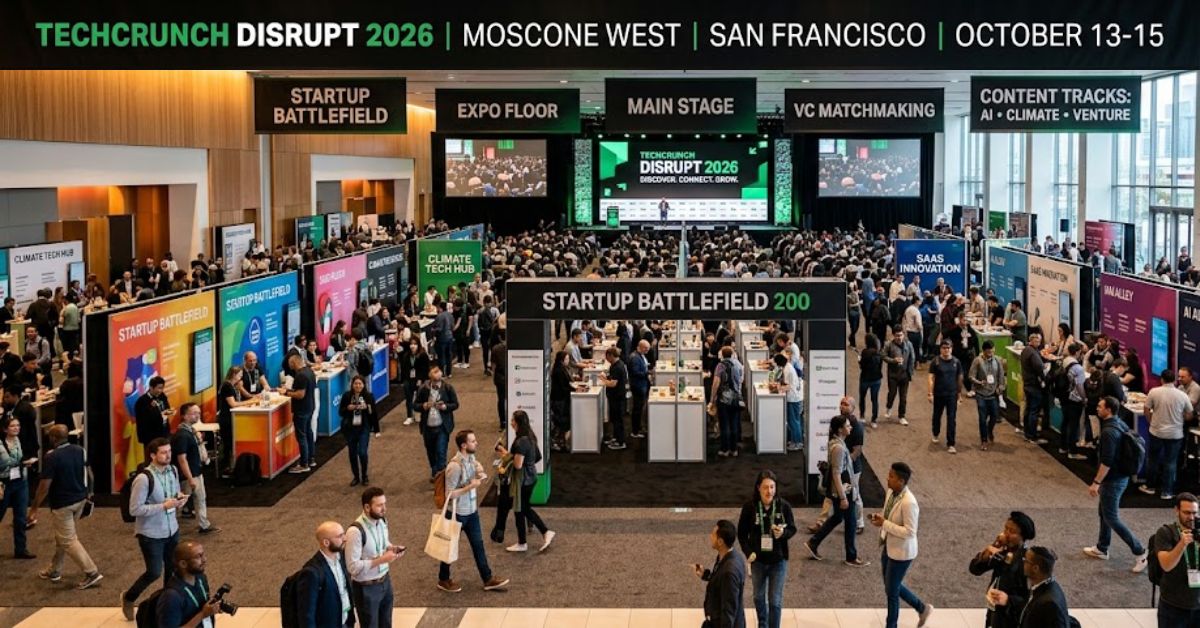
The TechCrunch Disrupt Conference returns to San Francisco in 2026 with a three-day program built for founders, investors, operators, and technology leaders. The event runs October 13–15 at Moscone West and is expected to attract more than 10,000 attendees. Its mix of startup pitches, expert sessions, product discussions, and curated networking makes it one of the most closely watched startup gatherings in the Unite
This guide explains what attendees can expect from TechCrunch Disrupt 2026, including Startup Battlefield 200, the six conference stages, featured speakers, ticket choices, and networking formats. It also separates confirmed details from promotional claims that may change before October. Anyone planning to attend should use the official event page for final schedules, prices, eligibility rules, application deadlines, and session updates as the conference approaches.
TechCrunch Disrupt Conference 2026 at a Glance
The 2026 TechCrunch Disrupt conference will take place from October 13 through October 15 at Moscone West in downtown San Francisco. TechCrunch describes the event as a meeting point for startups and venture capital, with more than 10,000 attendees expected. The official program currently lists over 200 sessions across six stages, led by more than 250 technology leaders, founders, investors, and industry experts from several major
The conference is designed for several audiences rather than one narrow group. Early-stage founders can seek feedback and investor introductions. Growth-stage operators can study hiring, pricing, product-market fit, and go-to-market systems. Investors can review vetted startups and emerging sectors. General attendees can follow major discussions in artificial intelligence, fintech, energy, robotics, infrastructure, and startup building while expanding their professional
| Event detail | Confirmed information |
|---|---|
| Dates | October 13–15, 2026 |
| Venue | Moscone West |
| City | San Francisco, California |
| Expected attendance | More than 10,000 attendees |
| Programming | More than 200 sessions |
| Main stages | Six |
| Core audiences | Founders, investors, operators, and innovators |
What Is Startup Battlefield 200?
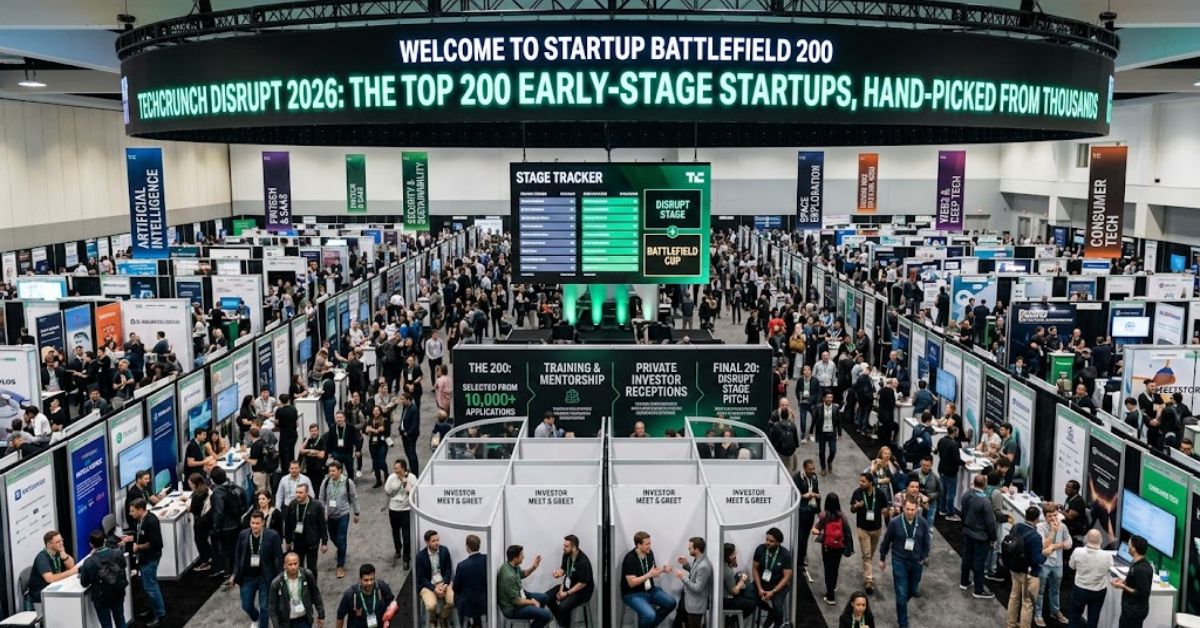
At the TechCrunch Disrupt conference, Startup Battlefield 200 remains the flagship startup program. TechCrunch selects 200 pre-Series A startups for exposure, coaching, investor access, and participation in the broader Disrupt ecosystem. However, the full group does not deliver identical main-stage pitches. TechCrunch says the top 20 companies are chosen to pitch live before experienced judges and compete directly for the Startup Battlef
The winning startup receives a $100,000 equity-free prize, which means TechCrunch does not take ownership in exchange for the award. The larger value may come from visibility, feedback, press attention, and investor conversations. Founders considering the program should prepare clear evidence of the problem, market, product, traction, team strength, competitive advantage, and reasons their company can become a durable venture-scale
A strong Startup Battlefield application should clearly explain:
- The specific problem the startup solves
- Why existing solutions remain inadequate
- The size and urgency of the target market
- Product differentiation and defensibility
- Early customer, revenue, or usage evidence
- The founders’ relevant experience
- How the company could scale internationally
Six Stages and More Than 200 Sessions
The TechCrunch Disrupt conference uses a six-stage format rather than forcing every audience into one broad agenda. The Disrupt Stage covers major conversations in venture capital, global technology, and Startup Battlefield. The Builders Stage focuses on practical company-building advice. The AI Stage, presented by Google Cloud, examines AI agents, generative AI, enterprise workflows, software pricing, cybersecurity, governance, and the changing economics of software c
Three additional industry stages expand the program beyond software startups. Smart Money covers payments, embedded finance, stablecoins, and fraud prevention. Smart Systems examines data centers, energy capacity, automation, robotics, and climate infrastructure. AI in the Real World focuses on deployment in manufacturing, defense, industrial operations, and robotics. This structure makes session planning essential because several relevant discussions may run at the s
| Stage | Primary focus |
| Disrupt Stage | Venture capital, global technology, and Startup Battlefield |
| Builders Stage | Fundraising, hiring, product-market fit, and scaling |
| AI Stage | AI agents, generative AI, SaaS, security, and workflows |
| Smart Money | Payments, stablecoins, embedded finance, and fraud |
| Smart Systems | Energy, data centers, robotics, and infrastructure |
| AI in the Real World | Manufacturing, defense, automation, and industrial AI |
Speakers and Major Technology Themes
The announced speaker lineup includes Jeff Lawson, co-founder of Twilio; Arvind Jain, founder and CEO of Glean; and Panos Panay, Amazon’s senior vice president for Devices, Alexa, and Leo. Their scheduled discussions cover fusion power, sustainable AI-era SaaS models, enterprise knowledge systems, ambient computing, product strategy, and the future of everyday connected devices after the smartphone era reaches a more matu
Another notable session brings all five Benchmark general partners together on the Disrupt Stage to debate where the next generation of startups may emerge. The wider agenda also addresses generative AI security, pricing when models become commoditized, commercial fusion energy, and the difficult move from deep-tech hardware prototypes to profitable production. These topics reflect current operational problems rather than abstract trend for
Major themes scheduled for 2026 include:
- Generative AI and agent security
- Sustainable SaaS and AI product pricing
- Enterprise AI governance and observability
- Commercial fusion energy
- Robotics and autonomous systems
- Stablecoins and payment infrastructure
- Deep-tech manufacturing
- Scaling hardware from prototype to production
- Hiring and compensation in an AI-driven market
Networking and Disrupt Week Side Events
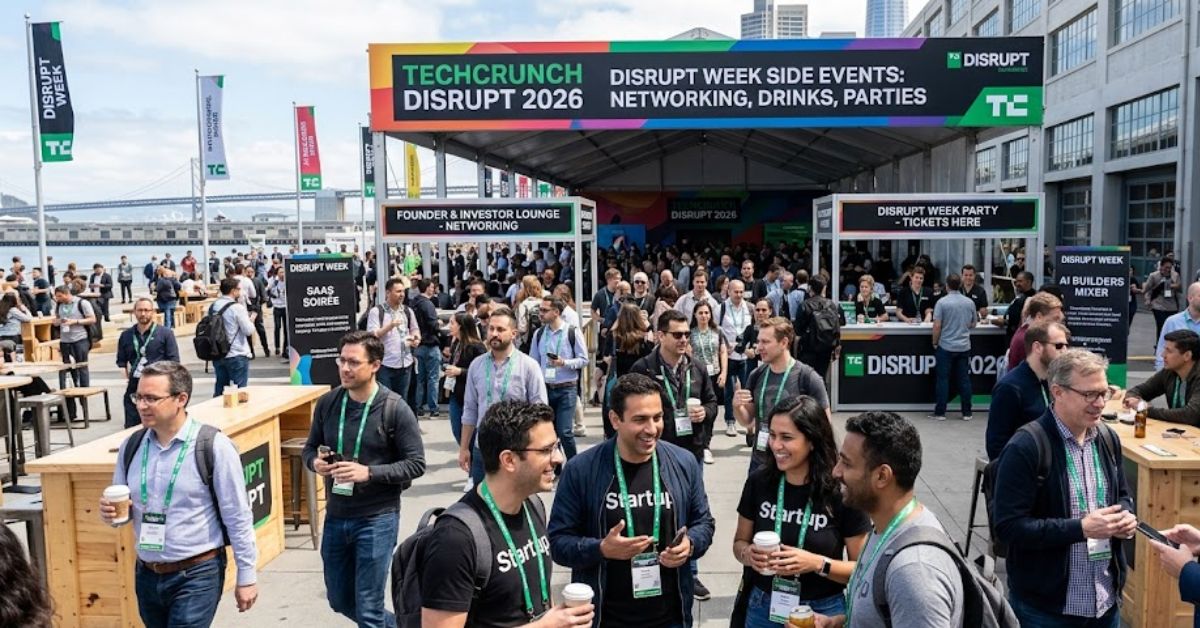
Networking is a central part of the TechCrunch Disrupt conference, but useful results require planning. Braindate networking lets attendees schedule one-to-one or small-group conversations around specific topics. The Deal Flow Cafe gives eligible founders and investors a more focused setting for introductions. Founder and Investor Pass holders also receive access to curated lists that can help them identify relevant people before t
The conference also promotes partner-hosted side events across San Francisco, including panels, workshops, meetups, cocktail gatherings, and happy hours. These activities extend the experience into what attendees commonly call Disrupt Week. TechCrunch has not confirmed an official total of 100 or more 2026 side events, so that number should not be presented as fact. Attendees should review live listings and avoid overbooking evenings after full confere
Networking preparation checklist:
- Define three measurable goals before arriving.
- Create a 20-second personal introduction.
- Update your LinkedIn profile and company description.
- Research investors, founders, and speakers in advance.
- Request targeted Braindate meetings early.
- Prepare specific questions instead of generic conversation starters.
- Leave open time for unplanned introductions.
- Record follow-up notes immediately after each meeting.
- Send useful follow-up messages within two business days.
Passes, Prices, and Attendance Planning
For the TechCrunch Disrupt conference, ticket choice should match the outcome you want, not the prestige of the badge. As of July 21, 2026, TechCrunch lists early-bird prices of $559 for an Attendee Pass, $579 for a Founder Pass, and $799 for an Investor Pass. Prices can change before the event. Founder and Investor passes add specialized networking benefits, while investor registration requires verification by the ev
Group discounts are available under specific rules. Groups of four to nine can receive 15 percent off eligible pass types, while groups of 10 or more can receive 30 percent off. Founder and Expo+ passes are excluded from some bundle options. Before buying, compare access carefully, confirm eligibility, review the refund deadline, and calculate travel and hotel costs rather than judging the trip only by tick
| Pass | Listed early-bird price | Best suited for | Notable benefits |
| Attendee Pass | $559 | Operators and general attendees | Stages, roundtables, breakouts, Expo Hall, and networking |
| Founder Pass | $579 | Startup founders | Deal Flow Cafe, investor networking, and curated investor list |
| Investor Pass | $799 | Verified investors and VCs | Founder access, StrictlyVC session, and investor reception |
| Non-Profit Pass | $249 | Eligible nonprofit and public employees | Main conference programming and Braindates |
| Student Pass | $259 | Students and recent graduates | Conference sessions and networking access |
| Expo+ Pass | $149 | Visitors focused on the exhibition experience | Limited access compared with full passes |
Follow these steps before registering:
- Decide whether your main goal is learning, fundraising, investing, recruiting, or partnerships.
- Compare the exact benefits of each pass.
- Confirm that you qualify for restricted passes.
- Check the current price and refund policy.
- Estimate flights, lodging, meals, and local transportation.
- Review the agenda before booking travel times.
- Build a meeting list before arriving in San Francisco.
Conclusion
The TechCrunch Disrupt conference offers a concentrated view of startup fundraising, company building, artificial intelligence, fintech, energy, and physical technology. Its strongest features are Startup Battlefield 200, the six-stage agenda, experienced speakers, and structured founder-investor networking. The event can be valuable, but only for attendees who arrive with clear goals, relevant research, prepared introductions, and a disciplined daily schedule for all three days.
For founders, the priority may be investor meetings, pitch feedback, or partnership leads. Investors may focus on vetted pre-Series A companies and sector-specific deal flow. Operators and general attendees may benefit most from targeted sessions and peer connections. Review the official agenda regularly because speakers, session times, ticket prices, pass benefits, and side-event details may change before the conference opens on October 13, 2026.