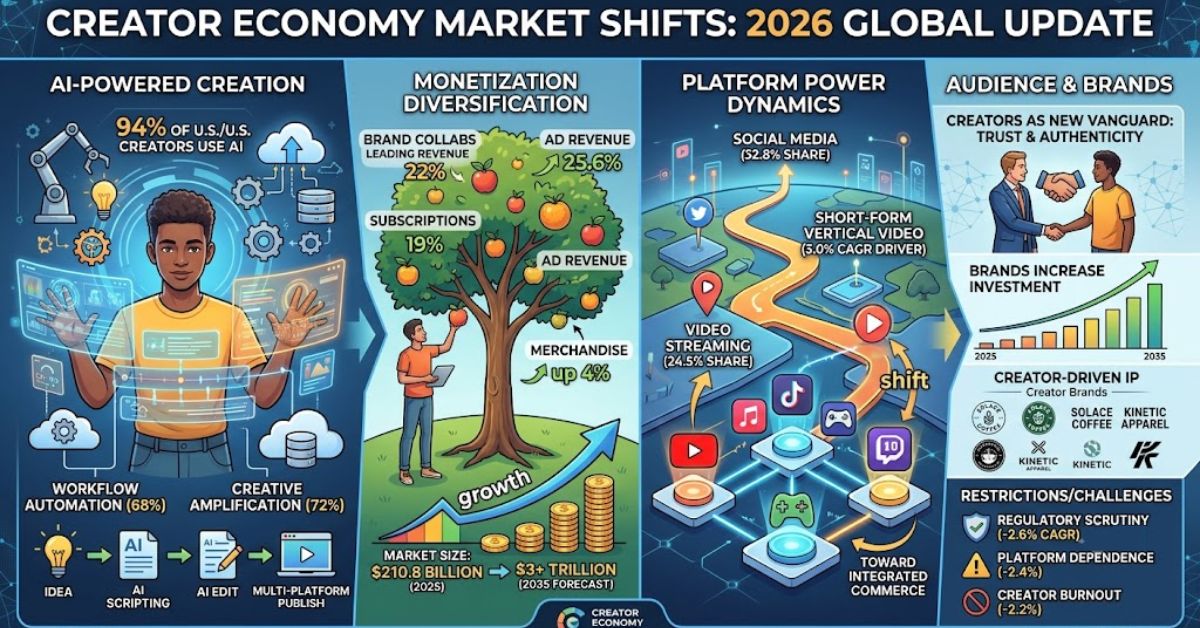
The creator economy has entered a new stage of growth. What started as individual creators sharing videos, photos, and ideas online has become a global business ecosystem worth hundreds of billions of dollars. The latest Creator Economy News Today shows a major shift toward corporate investment, professional creator businesses, AI-powered content, and stronger industry standards.
The creator economy is no longer only about influencers chasing views. It now includes marketing agencies, technology companies, universities, advertising platforms, and global brands. With the industry crossing a $314 billion valuation, businesses are treating creators as a serious part of modern media and commerce.
The Biggest Creator Economy News Today
The biggest Creator Economy News Today focuses on large business deals, advertising growth, and new systems that are changing how creators work. Companies are investing heavily because creators now influence purchasing decisions, brand awareness, and online communities.
Several major developments are shaping the market:
- Large consulting companies are acquiring creator marketing agencies.
- Social platforms are expanding creator advertising programs.
- Countries are creating official recognition systems for digital creators.
- Brands are testing AI influencers alongside human creators.
These changes show that the creator economy is becoming more organized and professional. Creators are moving from being independent content producers to becoming business partners for companies across industries.
Accenture Acquires Whalar and Creator Marketing Expands
One of the biggest creator economy developments is Accenture’s acquisition of Whalar, a leading influencer marketing agency. The deal represents a major step in bringing creator marketing into traditional business consulting and enterprise solutions.
This acquisition shows that large companies now view creators as valuable business assets. Instead of treating influencer campaigns as small marketing experiments, companies are building long-term strategies around creator partnerships, audience data, and digital communities.
The move also highlights a growing trend where professional services companies want deeper access to the creator economy. They are combining technology, analytics, and marketing expertise to help brands build stronger relationships with online audiences.
Meta Partnership Ads Reach a $10 Billion Run Rate
Meta’s creator partnership advertising business has become a major revenue engine. The company’s partnership ads division reaching a $10 billion run rate proves that creator-driven advertising is becoming a powerful alternative to traditional media.
Brands are increasingly choosing creators because audiences often trust individual voices more than traditional advertisements. Creator content feels more personal, which can improve engagement and buying decisions.
| Advertising Channel | Main Benefit | Current Trend |
|---|---|---|
| Traditional TV Ads | Large audience reach | Stable but slower growth |
| Social Media Ads | Targeted audiences | Rapid expansion |
| Creator Partnership Ads | Trust and engagement | Strong business growth |
| AI-Generated Ads | Lower production costs | Early adoption |
Meta’s growth also shows that platforms are creating better tools for creators to earn money while helping brands reach specific audiences.
Pakistan Influencer Awards Create New Industry Standards
Another important Creator Economy News Today update is the launch of the Pakistan Influencer Awards. The initiative aims to create research-based and audited recognition for digital creators who influence communities and public conversations.
Regional creator markets are growing quickly, especially in countries with young online populations. Pakistan has seen rapid growth in content creation across education, entertainment, technology, lifestyle, and business categories.
Industry awards can help creators gain more credibility. They may also encourage better standards around transparency, audience trust, and professional content creation.
How the Creator Economy Became a $314 Billion Industry
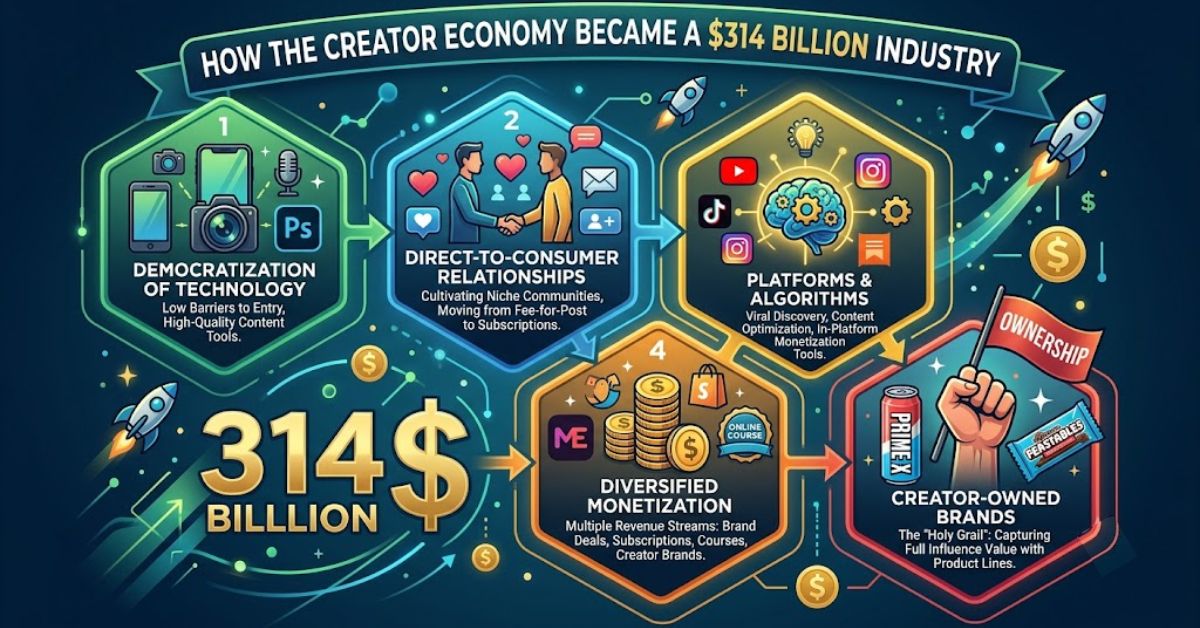
The creator economy has grown from a small online movement into a global economic force. Analysts estimate that the industry has passed a $314 billion valuation and could continue expanding significantly in the coming years.
This growth comes from multiple revenue streams, including advertising, brand partnerships, digital products, subscriptions, online courses, and e-commerce.
The modern creator business model includes:
- Sponsored content partnerships
- Affiliate marketing
- Digital products and courses
- Membership communities
- Merchandise sales
- Creator-owned brands
Creators today are building companies, not just audiences.
From Independent Creators to Corporate Infrastructure
In the early days of social media, creators mostly depended on platform payments and occasional sponsorships. Today, many creators operate like small businesses with teams, managers, editors, accountants, and marketing professionals.
Large companies are also creating dedicated creator departments. They use creators for product launches, customer education, and community building.
| Old Creator Model | Modern Creator Business Model |
|---|---|
| Individual content creation | Professional media companies |
| Limited income sources | Multiple revenue streams |
| Small brand deals | Enterprise partnerships |
| Personal audience only | Community-based businesses |
This transformation explains why corporations are investing more money into creator partnerships.
Creator Advertising Revenue Growth in the United States
The U.S. creator advertising market has become one of the strongest parts of the digital economy. Creator-driven advertising revenue has reached around $44 billion, placing it close to traditional broadcast media spending.
Brands prefer creators because they can reach highly focused audiences. A technology creator can influence software buyers, while a fitness creator can influence health product customers.
Companies are now measuring creator campaigns using business results such as:
- Sales conversions
- Website traffic
- Customer engagement
- Brand awareness
- Long-term audience growth
Universities and Education Programs Enter the Creator Space
Higher education institutions are recognizing content creation as a real career path. Universities are introducing creator economy courses and programs to prepare students for digital careers.
Programs like creator economy minors teach skills beyond filming videos. Students learn:
- Digital marketing
- Brand building
- Audience analytics
- Entrepreneurship
- Content strategy
This academic shift shows that creator careers are becoming more structured and respected.
AI Influencers Are Changing Creator Business Models
Artificial intelligence is becoming one of the biggest forces affecting the creator economy. Brands are experimenting with virtual influencers and AI-generated personalities to reduce costs and create scalable marketing campaigns.
The rise of AI creators does not mean human creators will disappear. Instead, the industry is moving toward a mixed model where human creativity and AI technology work together.
Human Creators vs AI Personas: A New Brand Debate
Brands are now comparing human creators with AI influencers when planning marketing budgets.
| Human Creators | AI Personas |
|---|---|
| Real experiences and emotions | Fully controlled digital identity |
| Strong audience trust | Lower production costs |
| Personal connection | Easy scalability |
| Limited availability | Available 24/7 |
Many brands still value human authenticity. However, AI personas provide new options for companies looking for faster content production and global campaigns.
How Brands Are Using AI for Marketing Decisions
Some companies are testing AI-generated creator profiles during budget discussions. These virtual personas help brands compare costs and understand possible campaign outcomes.
AI tools are being used for:
- Content ideas
- Video generation
- Audience research
- Performance prediction
- Marketing automation
Creators who learn AI tools may gain a competitive advantage by producing content faster and managing their businesses more efficiently.
Major Legal and Brand Lessons for Creator Businesses
The creator economy is growing quickly, but it also faces challenges. Many creator-founded brands fail because popularity alone does not guarantee business success.
Recent market analysis shows that some celebrity-backed brands struggle because they focus heavily on attention but lack strong operations, supply chains, or customer support systems.
Celebrity Brand Failures and Operational Challenges
A large audience can help launch a product, but long-term success requires more than followers.
Successful creator brands need:
- Quality products
- Reliable manufacturing
- Customer service systems
- Clear pricing strategies
- Legal compliance
Creators entering business ownership must think like entrepreneurs, not only influencers.
Increasing Regulations Around Creator Products
Regulators are paying closer attention to creator-founded products, especially in industries like health and supplements.
For example, claims about wellness products must be supported by evidence. Brands that make unclear or misleading claims may face legal challenges.
Creators should focus on:
- Honest advertising
- Clear product information
- Proper disclosures
- Customer safety
Trust remains one of the most valuable assets in the creator economy.
What These Creator Economy Trends Mean for Businesses and Creators
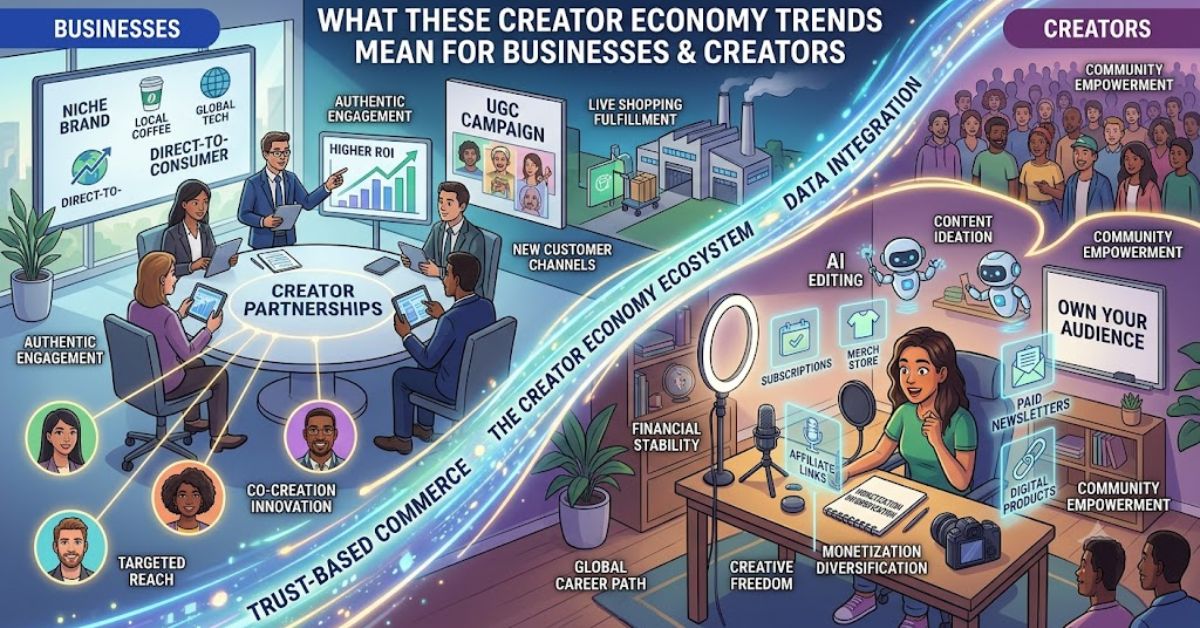
The latest Creator Economy News Today shows that opportunities are increasing for both creators and businesses. However, success requires professionalism, strategy, and adaptability.
Creators should focus on building sustainable businesses instead of depending on a single platform.
Important steps include:
- Build a strong personal brand.
- Create multiple income sources.
- Learn marketing and business skills.
- Use technology effectively.
- Maintain audience trust.
Businesses should also understand that creators are not just advertising channels. They are community leaders who can influence customer behavior.
The Future of the Creator Economy
The creator economy is expected to continue expanding as technology improves and more people enter digital careers. Industry projections suggest the market could approach $500 billion in the coming years.
Future growth will likely come from:
- AI-powered content creation
- Creator-owned companies
- Global influencer markets
- Digital education
- Community-based businesses
The next generation of creators will combine creativity, technology, and entrepreneurship.
Conclusion
The latest Creator Economy News Today shows that digital creators have become a major force in global business. From Accenture’s acquisition of Whalar to Meta’s creator advertising growth and the rise of AI influencers, the industry is becoming more structured and valuable.
Creators are no longer only content producers. They are entrepreneurs, marketers, educators, and business owners. As the creator economy continues growing, those who build trust, use technology wisely, and create real value will have the strongest opportunities.